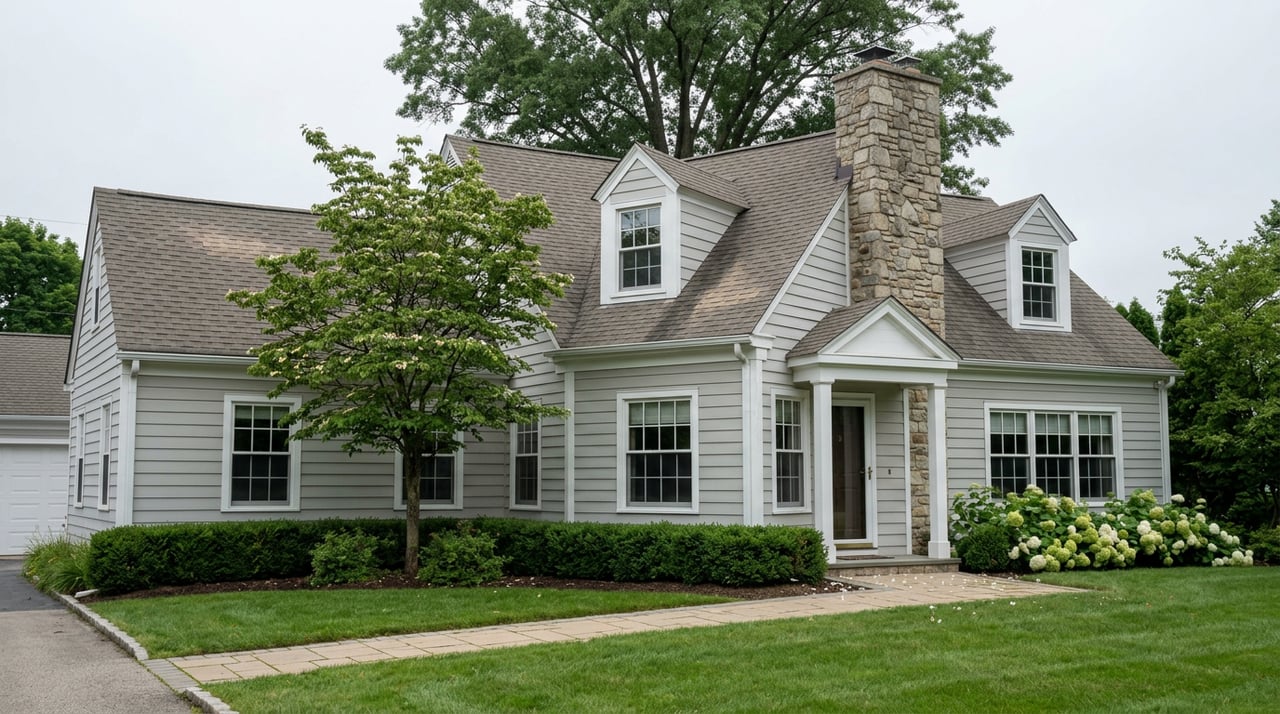
A buyer we've worked with pulled up two listings in Lake Linganore last spring. Same square footage. Same builder era. Same three-bedroom colonial layout down to the garage placement. One was in Nightingale. The other was in Woodridge. The HOA dues on the listing sheets were different by several hundred dollars a year, and neither agent involved could tell her why.
The honest answer is that Lake Linganore doesn't charge a flat community fee. It runs a formula, and the formula is tied to something most buyers never think to ask about: the average state tax-assessed value of the homes in your specific village.
The dues aren't set. They're calculated.
The Lake Linganore Association, chartered in 1968 and now managing more than 3,000 properties for over 10,000 residents, doesn't pick a number and charge every household the same rate. Per its own budget documents, the process works like this: each year, the tax-assessed value of every home in a village gets tallied and averaged. That average is divided by $100 and multiplied by an assessment rate the Declaration caps at $0.75 for every $100 of value. The Board has authority to set that multiplier lower if the year's operating budget allows it, and it has. For FY23, the board reduced the multiplier from .334000 to .326000 as the number of homes and available income grew.
That single mechanism explains why your dues can differ from your neighbor's in another village even if your homes look identical from the street. You're not paying for your house. You're paying a rate applied to your village's average assessed value, and villages don't share the same average.
Nightingale is the clearest documented example. In resident Q&A records tied to the FY19 budget, association staff acknowledged that Nightingale's dues had increased more than $500, nearly 25 percent, since FY16. Homes in that village carry a higher average assessed value than some neighboring villages, and the formula passed that difference straight through to the annual bill, year after year, without a single new amenity being built.
The paradox that catches condo buyers off guard
Here's where the mechanism produces a genuinely backward result. Condo units in Lake Linganore carry the lowest base LLA assessment of any property type in the community, historically cited around $615 a year. On paper, that looks like the deal of the neighborhood. A buyer comparing HOA lines across property types could reasonably conclude condos are the cheapest way into Lake Linganore.
They are not. Condo owners also pay a separate monthly assessment to their own condo association, historically running over $200 a month for building maintenance and shared infrastructure. Add that to the LLA base fee and condo owners in Lake Linganore end up paying over $3,200 a year in total assessments, by the association's own accounting in resident budget materials. That's the highest all-in annual cost of any housing type in the community, sitting behind what looks like the cheapest number on the sheet.
This is the detail that trips people up during a search. If you're comparing a detached home's single LLA line item against a condo's single LLA line item, you're not comparing the same thing. The condo number is missing a second bill that arrives every month from a different entity entirely.
Some villages carry their own extra assessments on top of the formula
The base formula isn't the whole story either. Certain villages carry additional charges layered on top of their standard assessment, tied to specific infrastructure only that village uses.
Aspen North has a dedicated retaining wall assessment, collected annually from lot owners to fund maintenance and eventual replacement of the retaining wall behind the lower half of the village. The amount was set by a reserve study at initial construction and sits in a separate reserve account until it's needed.
Townhome owners in Oakdale and Hamptons pay a landscaping assessment specific to those villages, covering the cost of mowing front lawns and side yards for end units. It's a real cost that shows up only if you own a townhome in those two villages, and it won't appear on a detached home's assessment in Aspen or Coldstream.
Trash collection is billed the same way. The association adds a trash removal fee to every village's assessment except the condos, which run their own separate arrangement. Audubon Condos and Linganore Garden Condos, for instance, direct residents to Clagett Management for trash questions rather than to LLA staff. West Winds carries its own additional HOA layer on top of the master LLA assessment, a structure distinct from the rest of the community.
None of this is disclosed on a standard listing sheet. It surfaces in the resale packet, which sellers order at the time of sale and which summarizes current fees, outstanding balances, and village-specific charges. If you're comparing homes before that packet exists, you're working from an incomplete number no matter which village you're looking at.
What your money actually reaches depends on where you are
The formula determines what you pay. Your village determines what you're paying for. Lake Linganore's amenities aren't evenly distributed, and buyers weighing one village against another should know which lake and beach access come with which address.
| Village | Water access |
|---|---|
| Coldstream | Coldstream Beach, on Lake Linganore, one of the community's oldest villages |
| Nightingale | Nightingale Beach, along Lake Linganore |
| Meadows | Lake Merle Park Beach, on Lake Merle |
| Pinehurst | Access to Lake Anita Louise |
| Woodridge | Borders Lake Marion, the smallest of the four lakes |
Two homes might sit inside the same community boundary and still offer very different daily experiences depending on whether the nearest water is the 250-acre Lake Linganore itself or the smaller Lake Marion. That distinction matters more than most listing photos convey, and it's worth weighing against the assessment a given village charges before deciding a lower dues number makes one address the better deal.
What this means if you're comparing villages right now
If you're shopping Lake Linganore and trying to compare dues across listings, three questions will tell you more than the number on the sheet:
First, ask for the current resale packet or a recent copy of the village's assessment history, not just this year's figure. A village with a rising average assessed value, like Nightingale's documented trend, will likely keep climbing regardless of what amenities get added.
Second, if you're looking at a condo, ask for the condo association's separate monthly fee in addition to the LLA line item. The LLA number alone will understate your real annual cost by a wide margin.
Third, ask whether the village carries a bolt-on assessment tied to specific infrastructure, like Aspen North's retaining wall charge or the Oakdale and Hamptons landscaping fee. These don't show up in the base formula explanation and won't appear unless someone tells you to ask.
None of this makes Lake Linganore a bad HOA. It makes the number on the listing sheet a starting point rather than an answer. The formula is public, the reasoning behind it is documented in the association's own budget materials, and a buyer who asks the right three questions before writing an offer won't be surprised at closing.
A few questions worth asking
Does a higher assessed value in my village mean a nicer home? Not necessarily. It reflects the average across all homes in that village according to Maryland tax records, which can be pulled up or down by renovations, lot size, or simply how long ago homes there were reassessed.
Can the multiplier go up as well as down? Yes. The Declaration sets $0.75 per $100 as the ceiling. The board has discretion to set it lower when the budget allows, as it did for FY23, but nothing in that structure prevents it from rising back toward the cap in a tighter budget year.
Do vacant lots pay the same formula? Historically, yes, with adjustments. Association records show vacant lot dues have shifted between percentage-based and flat-rate structures in different budget years, and multiple lot owners have raised concerns about how that math applies to a second, unbuilt parcel next to a primary home.
If you're comparing villages, weighing a condo against a detached home, or trying to figure out what a specific address will actually cost you once the resale packet lands on your desk, that's exactly the kind of groundwork the Allwein Team does before you ever write an offer. Book your free consultation and we'll walk the numbers with you, village by village, before you fall in love with the wrong dues sheet.