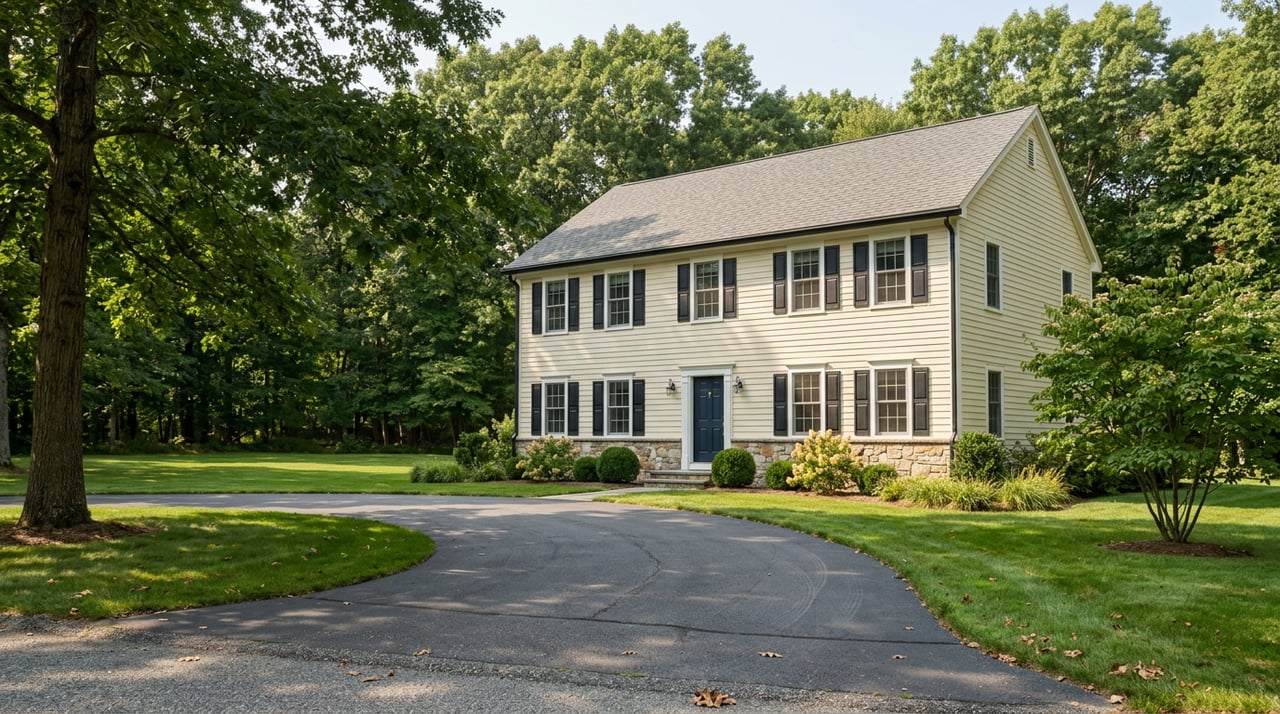
Picture a clean contract on a two-acre place off Old Annapolis Road. Inspection contingency is fifteen days. The buyer's lender is FHA. The septic tank hasn't been pumped in seven years, no one is sure where the lids are, and the seller assumes the county has the drawings on file. On day nine, the records request is still in a queue at the Frederick County Health Department. On day thirteen, the water sampler catches total coliform. The house is fine. The paperwork is what's threatening the deal.
That scenario is the shape of most rural Frederick County closings right now, and it explains something the price-per-square-foot conversation misses. In a market where buyers have finally regained real inspection leverage, the deals that unravel are rarely about the house. They're about a well and septic paper trail that has to line up inside a contingency window most buyers didn't budget for. The friction has moved from getting the house to getting the records in time.
The record request has a deadline your contract doesn't mention
The Frederick County Health Department's Environmental Health office keeps septic records as old as 1950, but existence isn't guaranteed for any given lot. To pull well and septic records on a specific property, a buyer or seller has to submit an Information Research Request Form. Allow 10 business days for a response to the request for well and septic information and 15 business days for percolation or other technical information.
Two full weeks. If your inspection contingency is fifteen calendar days, the math doesn't work unless the request goes in before you're under contract, or the day of ratification at the latest. The FCHD Well & Septic office is reachable at 301-600-1726, and paying with a card requires Visa or MasterCard only; debit cards are not accepted.
What you're looking for in those records:
- The Well Completion Report and any associated permits, which document depth, casing, grout, yield, pump information, and construction dates.
- The septic permit, tank size, disposal field location, and any repair history.
- Whether the system is conventional or a Best Available Technology (BAT) nitrogen-reducing unit, because a BAT changes the buyer's obligations at closing.
If the file is thin or missing, that isn't a red flag by itself. It's a schedule problem. It means the physical inspection has to compensate for the absent paperwork, and the inspector will have to locate the tank cold.
What actually gets inspected, and what a dye test doesn't cover
Maryland treats a property-transfer septic inspection as a document-plus-fieldwork exercise. The state's training standard requires a file search with the county, an interview with occupants, a physical system evaluation, and a written report with a system sketch; dye testing alone doesn't satisfy these requirements.
That last clause is the one buyers get wrong. A neighbor's plumber running dye down a toilet is not a real estate transfer inspection in Maryland. The certified inspection typically includes locating and uncovering the tank lids, pumping the tank so the inspector can look at the baffles and interior walls, checking flow from the house, probing for the drainfield, and producing a sketch that becomes part of the transfer documentation.
Local inspectors who handle this work in Frederick County include Tri-County Pump Service and Murray Underground Inspections. Reports usually turn around inside 24 hours, which matters when your contingency is short. If the tank lid is buried more than 18 inches below grade, expect additional excavation cost on top of the base inspection fee.
Setbacks that will come up on any inspection: dwellings must sit at least 30 feet from an existing well under COMAR, and Maryland's onsite code requires a minimum 100 feet between a septic drainfield and the well in an unconfined aquifer, or 50 feet in a confined aquifer. An older farmhouse that predates these rules can still transfer, but a lender or appraiser may flag it, and any new addition will trigger a review.
Water testing depends on the loan, and the sampler can't be you
Every mortgage program has its own idea of what "safe water" means. The panel a buyer needs depends on the loan and, in some cases, on Frederick County's own overlay.
| Loan or purpose | Typical required panel | Who can collect |
|---|---|---|
| Conventional | Bacteria (total coliform, E. coli), nitrates, turbidity, pH | Certified sampler |
| FHA and VA | Lead, nitrates, nitrites, bacteria (total coliform, E. coli), turbidity, pH | Disinterested third party only |
| FCHD Certificate of Potability (new construction occupancy permit) | Bacteria, nitrate, turbidity, plus well construction information | Certified water sampler, Maryland-certified lab |
Two rules trip up buyers repeatedly. First, all testing must be performed by a disinterested third party, including the collection and transport of the water sample. The buyer, seller, or agent cannot drop off a jug at the lab. Second, results have a shelf life. These results are valid for 90 days and must be submitted to the FHA within this period. Sample too early and it expires before closing. Sample too late and there's no room to re-shock and retest if bacteria comes back positive.
For FHA well flow, the general standard is a continuous flow of 3 to 5 gallons per minute for a sustained period, typically two hours. Most Frederick County wells clear that bar. The ones that don't tend to be older, shallower wells on smaller lots.
BAT systems: the maintenance contract that follows the deed
If the property has a nitrogen-reducing BAT unit, the buyer is inheriting a service obligation, not just a tank. Maryland requires a maintenance agreement or service contract with a qualified contractor in perpetuity, and annual inspection is required by the State of Maryland per COMAR 26.04.02.07E(3).
Practically, that means:
- A current O&M contract should be produced at or before closing. If none exists, one has to be signed with a manufacturer-certified provider.
- Budgeting matters. As one example, Legacy Septic's 2026 NORWECO BAT preventive maintenance program runs $425 per calendar year and includes two site visits, with the contractor filing the compliance notice with MDE. Other units and vendors will price differently.
- If the seller has been running the unit without a contract, expect the buyer's lender or inspector to want that resolved before closing.
BAT systems are more common on newer builds and on lots where perc conditions demanded a nitrogen-reducing tank at permitting. The Bay Restoration Fund $60 annual "flush tax," collected on property tax bills, is the pool of money that helps upgrade failing conventional systems, and it's a line item any well-and-septic homeowner sees on the annual bill.
Why this friction matters more in 2026 than it did in 2022
For four years, waived contingencies masked all of this. If a house came with a septic surprise, the buyer often ate it. That era is over in Frederick County. Over the three months ending April 2026, county home prices were up 5.5% year over year to a median of $501,000, and homes in Frederick County sell after 34 days on the market compared to 24 days last year. The city of Frederick sat at 37 days over the three months ending May 2026.
That extra time on market is the leverage story. Buyers are once again asking for repairs, inspection credits, and seller-funded remediation on well and septic findings that would have been shrugged off two years ago. The June 2026 read from local practitioners is that 48% of homes sold in 10 days or less, but the other half are the ones where inspection findings actually move the price. On a rural Frederick County property, well and septic is where those findings live.
A conventional tank replacement, an undersized drainfield, an iron-fouled well that needs treatment, or a BAT without a current O&M contract are all now negotiable line items in a way they weren't during the 2021 to 2023 stretch. That's a good thing for buyers, provided the record request went in on time.
PFAS: the test no one requires, but Frederick buyers should know about
There's one item that isn't on any lender's required list yet and still deserves a conversation. PFAS has been found in well and surface water in Frederick County, and currently the Frederick County Health Department is not taking PFAS samples. Buyers who want that peace of mind have to arrange sampling through a private certified lab. It's out-of-pocket, it isn't part of a standard FHA or VA panel, and it's the kind of test that fits better in the pre-listing phase for a seller than the crunched contingency window for a buyer.
A short FAQ
Can I use a well and septic inspection from three years ago? No. Water potability results are event-driven and time-limited. Lenders typically need results inside 90 days of closing, and a septic condition can change materially over three seasons.
What if the seller can't find the tank lids? The inspection can't proceed without access. Most inspectors offer a locate-and-hand-dig service up to about 18 inches. Deeper access requires additional equipment and cost. Get that decision made before scheduling.
Do I need a separate inspector, or can the general home inspector handle it? Maryland requires property-transfer septic inspections to be performed by professionals who have completed state-approved training. Most general home inspectors sub this out. Confirm before you schedule.
How does new construction differ? For a new home on a well, the Certificate of Potability from FCHD is required for the occupancy permit, and it's the seller/builder's job to produce it. Buyers should still ask for the paperwork before wire transfer.
If you're under contract on a Frederick County property with a well and septic system, or listing one and want the paper trail assembled before a buyer's inspector shows up, the Allwein Team has walked this exact sequence more times than we can count. Book your free consultation and we'll map the timeline against your contract, so the deadline you didn't put in the contract doesn't become the one that ends it.